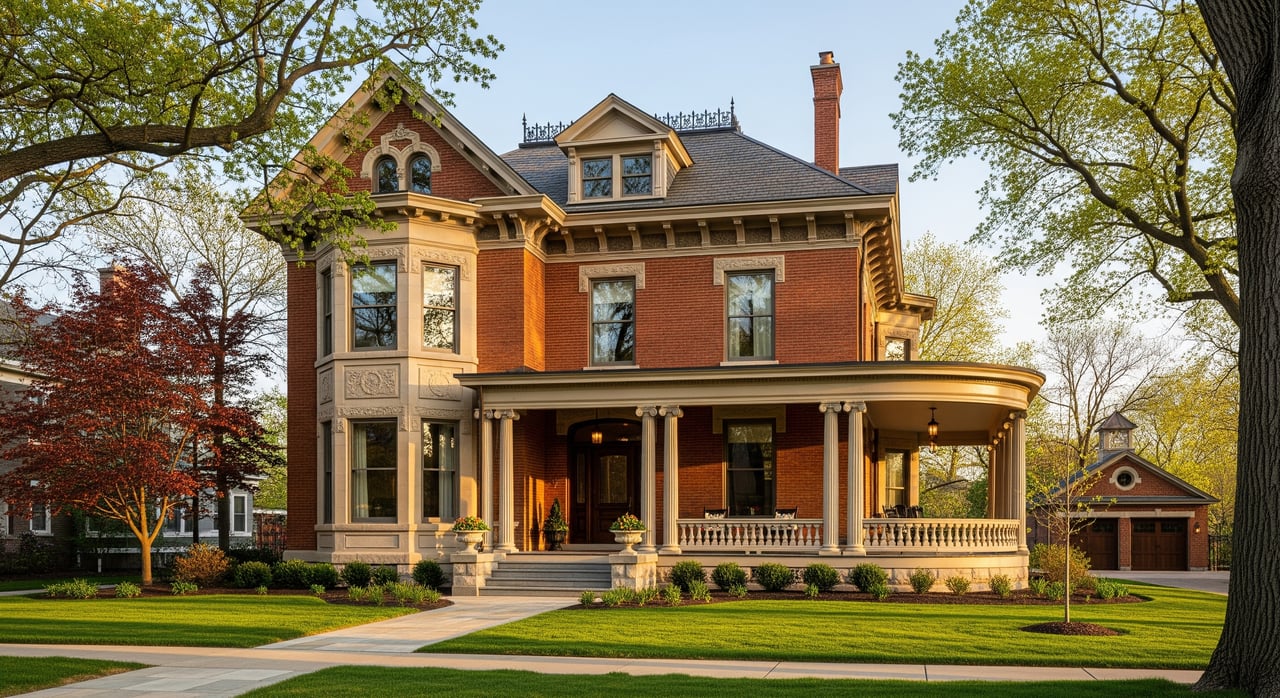
Wondering if the asking price on a Marion listing is fair for its size? Price per square foot can help you get oriented fast, but it is only one piece of the puzzle. If you understand what counts as square footage and what drives prices in each part of town, you can make smarter, more confident offers. In this guide, you will learn how PPSF works in Marion, what affects it by neighborhood and home age, and how to pair it with comps and a CMA for better decisions. Let’s dive in.
Price per square foot explained
Price per square foot is the sale price divided by the home’s gross living area. To compare homes fairly, you need the same definition of area for every property you review.
Most single-family homes use above-grade finished living area, often called gross living area or GLA. Garages, unfinished basements, porches that are not heated and finished, and sheds do not count toward GLA. Many MLS entries follow the ANSI measuring standard, which helps keep measurements consistent across listings.
Watch out for common pitfalls that skew PPSF:
- Mixing GLA with total building or tax-record area.
- Including finished basements in some listings but not others.
- Comparing very different property types or layouts, such as ranch vs. two-story.
- Relying on small samples or older sales in a market that has shifted.
Think of PPSF as a quick benchmark. It is not a full valuation by itself.
What drives PPSF in Marion
Neighborhood segments that matter
Marion is a smaller city, so micro-markets make a difference. In broad terms:
- Downtown and historic pockets near core amenities often show higher PPSF because of proximity to services and walkable features.
- Mid-town and established areas see PPSF driven by condition, updates, and lot appeal.
- Newer subdivisions at the edges may show moderate PPSF, especially when larger homes spread price across more square footage.
- Rural and acreage properties outside the city often have lower PPSF because larger lots raise the total price without adding to GLA.
Age and condition
Older homes can command strong PPSF in historic cores when they are updated and well maintained. Homes with dated systems or layouts usually show lower PPSF. Mid-century through 1990s properties vary widely based on updates. New construction typically reflects higher PPSF, paired with modern layouts and energy efficiency.
Size and layout
Smaller homes often show higher PPSF. As size increases, the price per square foot typically decreases. Compare houses within similar size bands to avoid misleading takeaways.
Lots, basements, and amenities
Big lots, finished basements, garages, pools, and major upgrades add value. These features work best as dollar adjustments rather than PPSF multipliers, since PPSF treats all square feet the same and does not capture features below grade.
Market timing
In a tight seller market, PPSF can rise quickly. In a slower market, it can soften. Use sales from the last 3 to 6 months when possible so your range reflects current conditions.
How to use PPSF with comps
PPSF is useful for a quick check, neighborhood comparisons, and screening multiple listings. It has limits because it ignores layout, room count, lot quality, condition, and upgrades.
Here is a simple method to build a PPSF-based range using comps:
- Define the subject home clearly. Note property type, GLA, beds and baths, lot size, and condition.
- Pull recent closed sales from the last 3 to 6 months within the same neighborhood or a nearby radius. Expand your search if inventory is low.
- Remove clear outliers, such as highly distressed or unusually upgraded properties.
- Calculate PPSF for each comp using sale price divided by GLA.
- Focus on the median PPSF and a realistic low to high band based on the group of comps. Median is more stable than the average in small markets.
- Convert that PPSF band into a price range for the subject by multiplying each end of the range by the subject’s GLA.
- Make dollar adjustments for features that PPSF misses, such as finished basements, premium lots, and major remodels.
Build a Marion PPSF range like a pro
Use this practical workflow when you evaluate PPSF for a Marion home:
- Define scope. Decide on single-family only or include condos, and set bedroom and bathroom ranges.
- Gather data. Pull closed sales for the last 3 to 6 months. If activity is slow and the market is stable, you can extend to 12 months.
- Verify GLA. Prefer MLS-reported GLA or ANSI-based measurements. Flag where county tax records differ.
- Clean the set. Remove non-comparable property types or clear outliers.
- Calculate and summarize. Find the median PPSF and a realistic band. State your time window and how many sales you used.
- Convert to prices. Apply the band to common sizes in Marion, such as 1,000, 1,500, and 2,000 square feet, so you can see practical ranges.
- Adjust thoughtfully. Use dollar adjustments for basements, lots, garages, and renovations based on local comp differences.
Illustrative example only, not Marion-specific numbers: If the median PPSF in a given micro-market is 90 dollars with a common range of 80 to 100 dollars, a 1,500 square foot home might indicate 120,000 to 150,000 before any adjustments. You would then add or subtract dollars for condition, basement finish, and lot premiums based on recent comps.
Quick buyer checklist
Use this checklist to sanity-check a Marion listing with PPSF:
- Area definition: Confirm that PPSF uses above-grade finished GLA only.
- Apples to apples: Compare homes of similar size, style, and age.
- Recent comps: Favor sales from the last 3 to 6 months.
- Sample size: Aim for a healthy group of comps. Be cautious with very small sets.
- Feature adjustments: Add or subtract dollars for basement finish, lot size, garage capacity, and major updates.
- Neighborhood lens: Segment by micro-market within Marion rather than the whole city.
When to request a full CMA
You should lean on a detailed agent CMA when precision matters or when the property is unique. Ask for a CMA if:
- There are few recent comps in your area of interest.
- The home has unusual features, large acreage, or a custom layout.
- Condition varies widely compared to nearby sales.
- You are setting a listing strategy or shaping an offer and need dollar-level adjustments.
Looking for a data-backed number you can trust and a clear plan for next steps in Marion? Reach out to Josh Cooper for a local CMA and on-the-ground guidance.
FAQs
Is price per square foot a good way to compare homes in Marion?
- It is a quick benchmark, but it should not replace a comps-based analysis or an agent CMA because PPSF misses layout, lot, condition, and upgrades.
How many comparable sales should I use for a Marion estimate?
- Aim for 10 to 20 closed sales when available. In tighter markets, you may have fewer, so be transparent about the sample size.
How recent should Marion comps be for PPSF?
- Prefer sales from the last 3 to 6 months. Extend to 12 months only when needed, and account for any market changes.
Do older Marion homes sell for more per square foot?
- It depends on condition and location. Renovated historic homes in desirable cores can command higher PPSF, while outdated older homes usually show lower PPSF.
How should I treat finished basements in Marion PPSF comparisons?
- Treat finished basements as separate dollar adjustments rather than adding them to above-grade GLA for PPSF. Check how local listings report basement space.
When should I insist on a Marion agent CMA instead of PPSF alone?
- For unique properties, low-inventory areas, pricing a listing, or when significant adjustments are needed, a CMA provides the precision PPSF cannot.