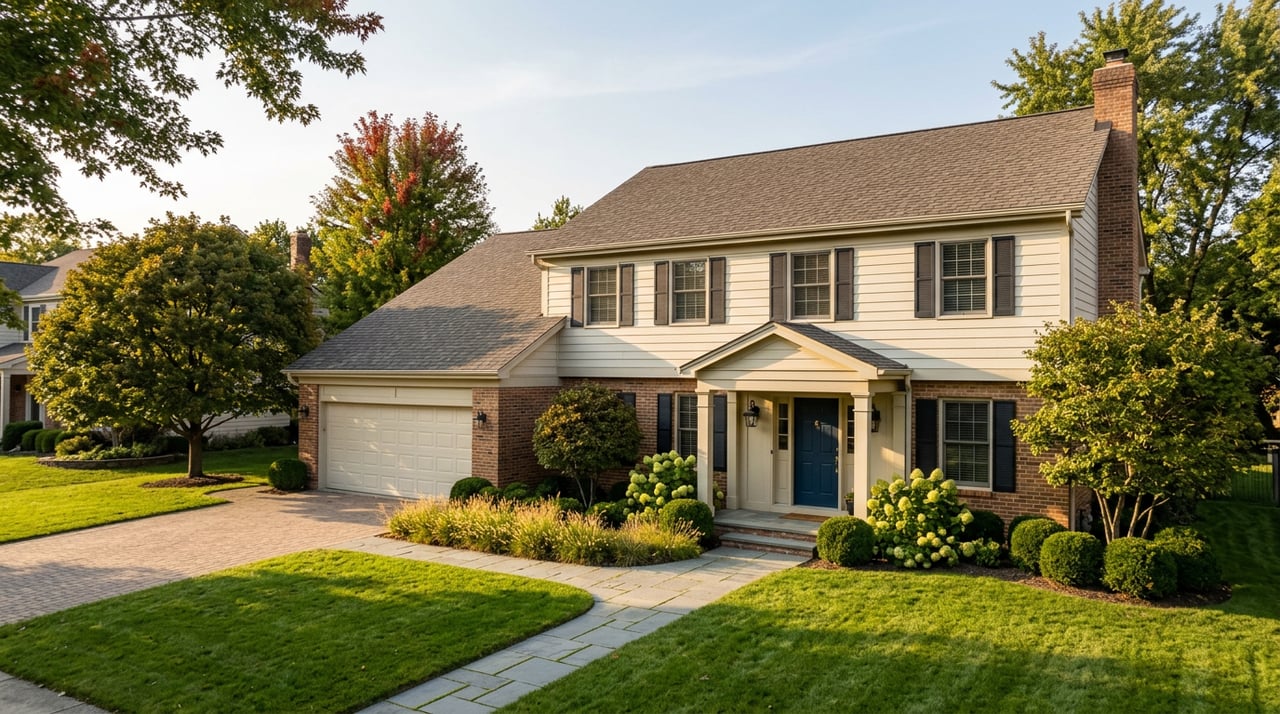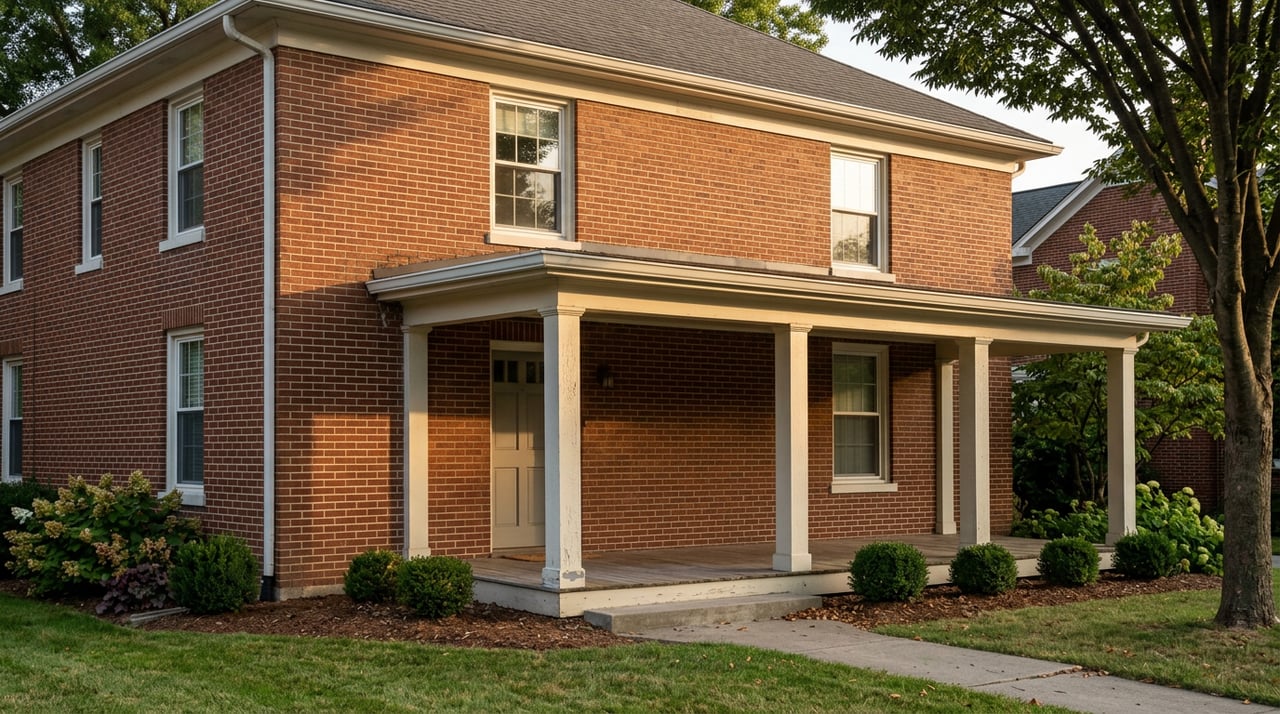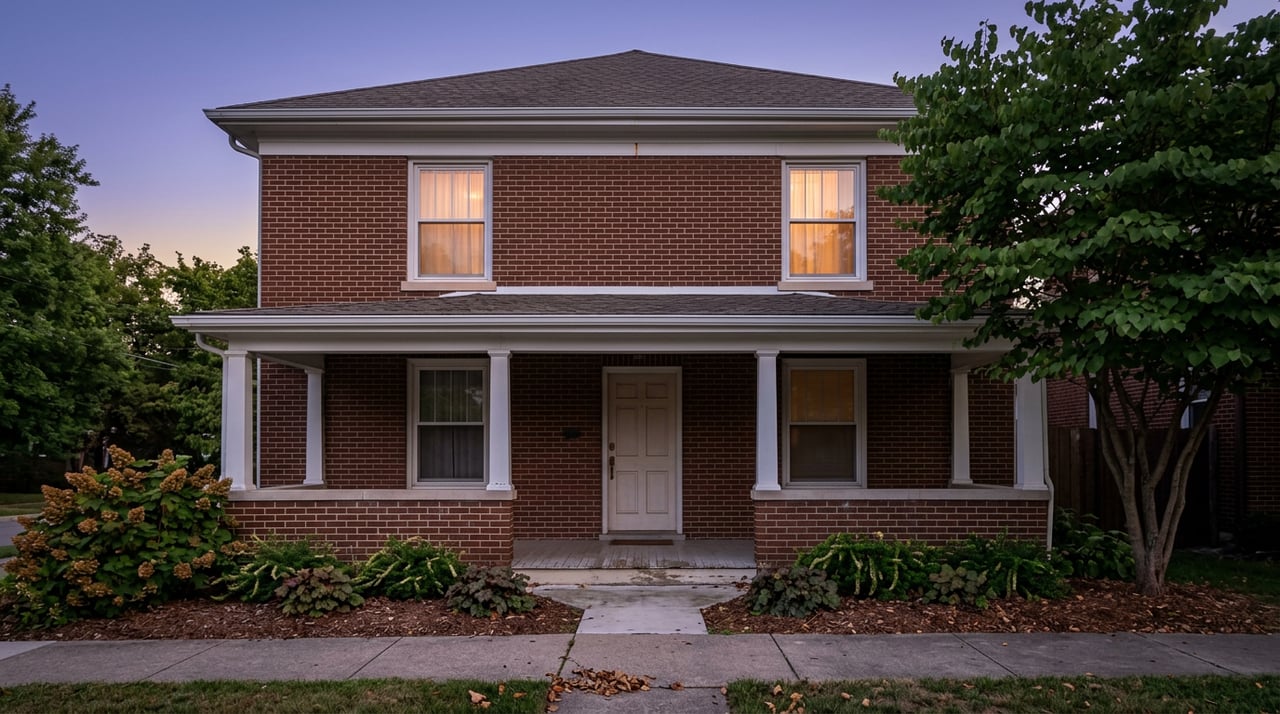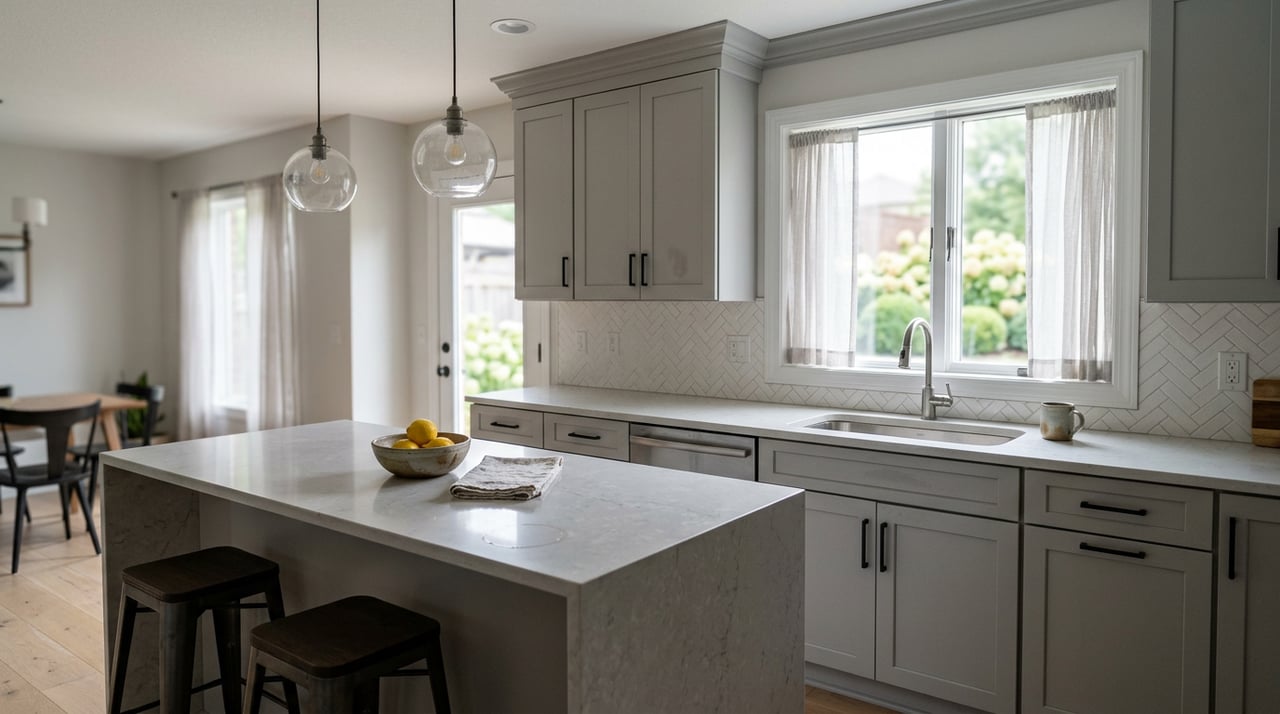
Two houses. One sits three blocks off Delaware's courthouse square, a century-old bungalow with a deep porch and plaster walls that have absorbed a hundred summers of Ohio humidity. The other sits in Park View, a two-story colonial finished last year with an open floor plan, a tankless water heater, and a garage door opener that's never needed a new remote. Put their list prices side by side and they land close enough to blur together. Everything else about owning them does not.
That's the part buyers miss when they start a search in Delaware, Ohio with a single number in mind. The city's median price doesn't tell you which set of rules comes attached to the house. And in Delaware, those rules diverge sharply depending on which side of that price band you land on.
The Price Gap Is Smaller Than People Assume
Local market data backs up how close these two paths have gotten. Redfin's figures for the three months ending in May 2026 put Delaware's median sale price at $405,000, up 1.2 percent from the same period a year earlier, with homes averaging $200 a square foot and going pending in about 44 days on roughly two competing offers. Zillow's home value index, updated through June 30, 2026, shows an average Delaware home worth $417,715, up just 0.2 percent year over year. Two different tracking methods, two different data sets, and they land within three percent of each other. That convergence matters because it means the "typical" Delaware home isn't a wide range anymore. It's a fairly narrow band, and both older and newer housing stock sit inside it.
On the ground, that band plays out like this: a well-maintained historic home near downtown often starts in the low $300,000s, while a mid-century suburban home tends to run from the high $300,000s into the low $400,000s. New construction frequently lands in the high $300,000s through the mid $400,000s. A recent example from Park View makes the overlap concrete. A home built there in 2025 sold for $373,910, a four-bedroom, two-bath layout with an open-concept design and a two-car garage, carrying monthly HOA dues of $85. Other listings in that same community were marketed between $420,990 and $446,990 for homes running 2,346 to 2,904 square feet. That $373,910 sale sits well within the same price territory as plenty of older homes closer to downtown.
So the sticker price stops being the useful signal. What actually separates these two homes is who gets to say yes or no the next time you want to change something about them.
The Certificate You Didn't Know You'd Need
Delaware established its Downtown Historic District in the 1990s specifically to protect the character of the buildings that give the city's core its identity. That protection comes with a mechanism most buyers never encounter until they own the house: the Certificate of Appropriateness.
Under Chapter 1115 of the city's zoning code, any exterior alteration to a property inside the historic district boundary requires approval from the Historic Preservation Commission before work begins. That covers more than you'd expect. Roofing material, paint colors, fixtures, signage, and facade work all fall under the commission's review. It's a board of citizen representatives evaluating whether your new roof or your porch railing fits the standards set for that block, and the process runs on its own timeline, separate from whatever your contractor's schedule looks like.
None of this means a historic home is a bad buy. It means the home comes bundled with an approval process most new-construction buyers never think about, because their exterior decisions get made once, by the builder, before closing.
The price tag tells you what you're paying. It doesn't tell you who you now have to ask before you repaint the shutters.
The Paperwork on the Other Side
New construction in Delaware carries its own version of this tradeoff, just with a different name on the form. Homes built in communities like Park View typically come with open-concept layouts, attached garages, and energy-efficient systems as standard, along with HOA-managed amenities in a meaningful share of these developments. The $85 monthly due attached to that recent Park View sale isn't unusual for the category. It funds the shared spaces and common maintenance that make a newer subdivision function the way it's marketed.
The difference is procedural, not just financial. A historic homeowner petitions a city commission for a certificate before altering the exterior. A new-construction homeowner in an HOA-governed community works through the association's design guidelines and approval process instead, whether that's for a fence, a shed, or an addition. Both paths route your decision through a third party. Neither is automatic.
What to Actually Check Before You Write an Offer
Buyers comparing a downtown home against a Park View listing tend to focus on square footage and finish level. Those matter, but they aren't where the real friction shows up after closing. Before you get too attached to either option, it helps to know:
- Whether the specific address falls inside the historic district boundary, since not every downtown-adjacent home does
- What the HOA declaration and dues schedule actually says for any new-construction community, not just the current monthly number
- How long the Historic Preservation Commission's review process typically takes for exterior projects you're already planning, like a roof replacement
- Whether the community's design guidelines restrict things you might want to add later, from a shed to a fence line
None of these questions show up on a standard listing sheet. They show up in county records, in the city's zoning documentation, and in the HOA's governing documents, which is exactly why they get skipped during a quick portal search and exactly why they're worth asking about before you're under contract.
The Actual Takeaway
Delaware's median price doesn't split cleanly along the old-home, new-home line the way people expect it to. A downtown bungalow and a Park View colonial can sell within a few thousand dollars of each other in the same season. What separates them is which authority you answer to when you want to change something about the place you just bought. One buyer petitions a commission. The other reads an HOA handbook. Knowing which conversation you're signing up for is worth more than knowing the median.
FAQ
How do I find out if a specific Delaware address is inside the historic district? The city's planning department maintains the boundary for the Downtown Historic District, and property owners inside it are required to follow the Architectural Standards outlined in Chapter 1115 of the zoning code. Checking with the city's planning and zoning office before you write an offer is the most direct way to confirm status.
Does owning a home in the historic district cost more than owning a comparable new build? Not necessarily in dollars. The bigger cost is time. Exterior projects that would take a weekend on a non-historic property, like repainting trim or swapping a roof material, go through the Historic Preservation Commission's review process first, which adds a scheduling step new-construction owners don't face.
Do all new construction communities in Delaware carry HOA dues? Many do, and the amount varies by community and by the amenities the association maintains. A recent Park View sale carried $85 in monthly dues, but any buyer considering new construction should request the actual HOA declaration for that specific community rather than assuming a flat rate applies across Delaware.
If you're weighing a downtown Delaware home against a new build in a community like Park View and want to understand what you're actually agreeing to on either side, MORE Ohio can walk through the paperwork with you before you're locked into either one. Work With Us to get a clear read on what each option really means for how you'll live in the house, not just what it costs to get in the door.