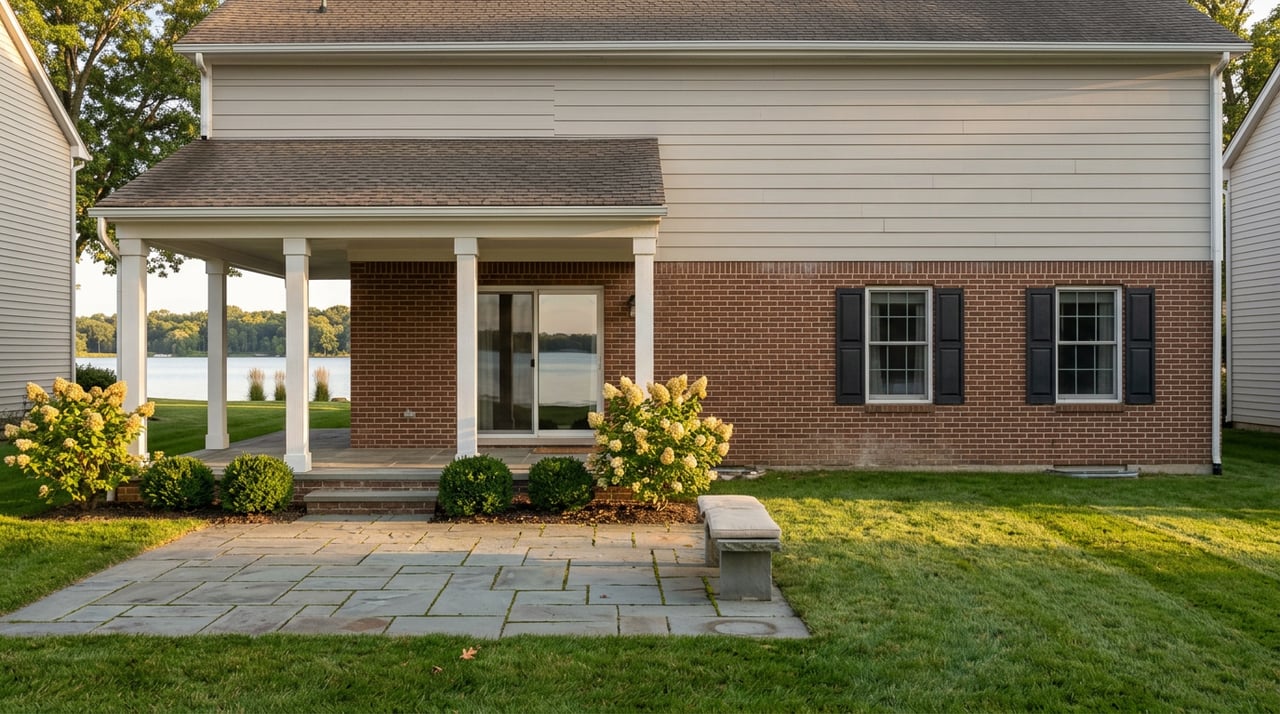
If you're touring a home for sale along Hoover Reservoir in Galena and the listing photos show a private dock, here's the fact almost nobody explains at the showing: that dock does not come with the house. It sits on land the seller doesn't own, and the paperwork that lets someone use it does not transfer at closing. The buyer has to start over.
This catches people off guard because everything else about the transaction looks ordinary. The plat map appears to run to the water. The seller talks about the dock the way they'd talk about a deck or a fence, something built and paid for and theirs to pass along. Neither is true here, and understanding why changes how you should shop, negotiate, and disclose on this stretch of Delaware County waterfront.
The Shoreline Isn't Part of the Lot
Hoover Reservoir supplies drinking water, drawn from Big Walnut Creek, and the City of Columbus protects that supply by owning the land around it. According to the city's own Land Stewardship Program FAQ, the property immediately adjacent to Hoover, Griggs, and O'Shaughnessy reservoirs belongs to the City of Columbus, not to the homeowners whose lots border it. The amount of city-owned land varies from parcel to parcel, and the city maintains maps showing exactly where each property line falls relative to the water.
Practically, this means a lot that looks waterfront on a plat drawing may actually stop well short of the shoreline, with a strip of city property filling the gap. You can buy the house. You cannot buy your way past that strip.
What a Land Stewardship Agreement Actually Lets You Do
The city's answer to this ownership problem is the Land Stewardship Program, run through its Watershed Management Section. It allows an adjacent landowner to apply for permission to use a defined slice of that city-owned buffer: a private dock or tie-up stake, a narrow foot path to the water, or removal of invasive plants. Property owners are also generally allowed to maintain a short access corridor to the water's edge, with mowing restricted to a single pass in the fall to protect the root systems that hold the bank together against erosion.
What it doesn't do is hand over control of the buffer. Tree removal, grading, or any other change to that strip requires separate sign-off, and enforcement is real. Owners who've cut down trees or altered the shoreline without approval have faced penalties tied to the size of the tree removed. The program exists precisely because the city needs to balance individual convenience against protecting the water supply for everyone downstream.
A dock in the listing photos is not a fixture. It's a permit, and permits belong to the person who applied for them, not to the house.
Why the Water Itself Behaves Differently Here
Part of what makes Hoover feel different from a typical Central Ohio lake is the same watershed logic that governs the dock program. The reservoir carries stricter boating limits than its sister lakes because of the soil underneath it.
| Reservoir | Speed / horsepower limit | Reason |
|---|---|---|
| Hoover | 10 mph / 10 hp | Clay soils erode easily; limits wake and sedimentation |
| Griggs | 40 mph / no hp limit | Different soil conditions |
| O'Shaughnessy | 40 mph / no hp limit | Different soil conditions |
All three reservoirs require idle speed within 100 feet of the shoreline or a bridge, and swimming and personal watercraft aren't permitted on Hoover since it's an active drinking water source. According to the Ohio Department of Natural Resources' fishing map for Hoover Reservoir, the lake carries roughly 45 miles of shoreline, with depth contours measured against a normal summer pool elevation of 894 feet.
None of that is a reason to avoid the water. It's a reason to understand what kind of water you're buying next to. This isn't a lake built for wake boats and jet skis. It's built for sailing, kayaking, fishing, and quiet.
The Agreement Doesn't Follow the Sale
This is the part that trips up both sides of a Galena waterfront deal. A current owner's Land Stewardship Agreement covers that owner's use of the buffer. It doesn't run with the land the way an easement or a deed restriction would. When the property sells, the new owner has to submit their own application and get their own approval, evaluated against whatever standards the city has in place at that time.
For sellers, that means the dock, the stairs to the water, or the tie-up stake can't be marketed as a guaranteed feature of the sale. You can disclose that an agreement exists and share a copy of it, but you can't promise the buyer will inherit the same access.
For buyers, that means the dock in the photos is a preference, not a certainty, until you've confirmed the site is eligible and gone through the process yourself.
Before writing an offer on a Hoover Reservoir lot in Galena, get answers to:
- Whether the specific parcel is currently within an active Land Stewardship Agreement, and what that agreement actually covers.
- Whether the site itself is eligible for a new dock or stake permit under the city's current standards, which you can confirm by contacting the Watershed Management Section directly at 614-645-1721.
- What documentation the seller can provide, understanding that it establishes history rather than a guarantee of transfer.
- Whether new dock or stake sites in that stretch of the reservoir are open for application, since availability has historically been limited.
- What the property's shoreline easement actually restricts, including tree removal and any grading you might have assumed was yours to do.
Beyond the Dock: What the Water Actually Offers
None of this makes Galena's Hoover Reservoir shoreline a lesser buy. It makes it a different kind of waterfront than what a lot of buyers picture when they hear the word lakefront.
You're not getting a private beach or a boat lift you can install without asking. You're getting a genuinely quiet, protected body of water where 10-mph boats, kayaks, and sailboats share space without the noise of a typical recreational lake. For buyers who want water access without owning a slip themselves, the Buckeye Boat Club operates on the east side of Hoover with roughly 101 dock slips available to members with pontoon boats. The Hoover Sailing Club runs lessons and races for a membership near 200, and the Westerville Crew rowing team trains on the reservoir most evenings. None of that requires owning shoreline at all.
Lakefront homes on this stretch have historically ranged from older cottages needing real work in the mid $500,000s to fully updated properties well past $2 million, and that spread reflects the fact that the dock and the water access aren't priced into the deed the way they would be on a private lake. What you're paying for is proximity, the view, and the option to apply for access, not a guaranteed right to it.
FAQ
If a Galena home already has a dock on Hoover, will it definitely be there when I close? Not automatically. The dock sits on city-owned land under an agreement tied to the current owner. You'll need to confirm the site's eligibility and submit your own application after closing.
Why does Hoover have a 10 mph speed limit when other Columbus reservoirs allow 40? The soil around Hoover is more prone to erosion, so the city caps speed and horsepower to limit wake and sedimentation along the banks.
Can I remove a tree on the shoreline strip in front of my property? Generally not without approval. That strip is city-owned, and unauthorized removal or alteration can result in penalties, so any change should go through the Watershed Management Section first.
If you're weighing a Hoover Reservoir property in Galena, or trying to figure out what a specific parcel's shoreline situation actually looks like before you write an offer, that's exactly the kind of detail Joshua D Cooper and the MORE Ohio Team track block by block. Work With Us.